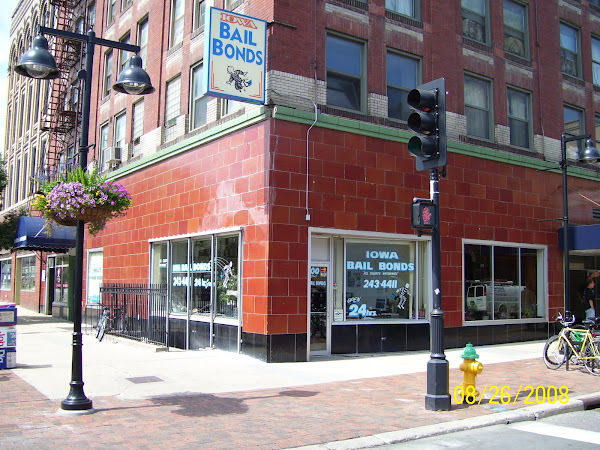
Jury Seeks 40 Year Prison Term for Bondsman's Murder
Bad timing cost James E. Carr seven years of freedom.
A Richmond jury recommended yesterday that Carr serve 40 years in prison for first-degree murder and felonious use of a firearm in the death of bail bondsman James W. Woolfolk III.
Minutes before the jury signaled that it had reached a decision on the sentence in its second day of deliberations, Carr's defense attorney and Richmond prosecutors had reached a plea agreement that would have given him 33 years in prison.
"I really have no reason to accept the plea agreement," Circuit Judge Beverly W. Snukals told the attorneys before calling in the jury to render its verdict.
Snukals will sentence Carr on Nov. 7, but members of Woolfolk's family left court yesterday satisfied with the jury's decision. The jury convicted Carr of first-degree murder on Tuesday.
"Though nothing will bring him back, this sure helps," said Theresa Godbold, niece of the 39-year-old bail bondsman, who was killed March 6 in South Richmond while trying to arrest Carr, 20, for skipping court on a felony drug charge.
James Woolfolk was the first bail bondsman killed in Virginia while on duty in recent memory. He was unarmed when he was shot three times from behind after finding Carr hiding in a bedroom closet at 2313 Joplin Ave.
"I shot him three times in the back. . . . I did a cowardly act," Carr confessed Tuesday evening during testimony on the sentencing.
Prosecutors said Carr had a simple reason for shooting Woolfolk: "He just did not want to go back to jail," said Assistant Commonwealth's Attorney Ann Cabell Baskervill, who called the shooting "a cold-blooded execution."
Carr's stepfather, Michael Morris, testified that Woolfolk had turned his back and started toward the living room when he was shot. "He said, 'All right, Jimmy, you know what this is. Let's go.'" Woolfolk's mother, Theresa Woolfolk, said the family was satisfied with the recommended sentence. "We hope the best for James Carr and his family," she said.
Defense attorney Dean C. Marcus said Carr had shown remorse from the beginning for killing Woolfolk. "It's been eating him up," Marcus said after the jury rendered its recommendation.
But Chief Deputy Commonwealth's Attorney Matthew P. Geary responded, "If Mr. Carr was truly remorseful for what he did, he would have spared his family and the victim's family the agony of trying this case."
Carr still faces charges in Richmond of illegal possession of a firearm by a felon, felony drug possession, and failure to appear in court -- the charge that brought Woolfolk to the house where he died. He also faces a charge that he violated his probation on a robbery charge in Henrico County, where he had a suspended sentence of 10 years.
Geary said his office is working with Henrico to revoke the suspension and reinstate the full sentence.
Tuesday, September 30, 2008

Tuesday, September 23, 2008
MINDY McCREADY JAIL
MINDY McCREADY JAIL

Country singer Mindy McCready surrenders to authorities tomorrow.
McCready's lawyer cut a deal with the Tennessee Williamson County prosecutor and will serve a 60 day sentence for probation violation.
The sentence stem from her falsifying her community service records while on probation for a 2004 drug charge.
McCready who made headlines over the summer as the under-age lover of baseball player Roger Clemens stated she wants to put this behind her so she can concentrate on her music career.
She's also trying to regain custody of her son Zander.
Mindy had a hit in 1996 with "Guys Do it All The Time."

Country singer Mindy McCready surrenders to authorities tomorrow.
McCready's lawyer cut a deal with the Tennessee Williamson County prosecutor and will serve a 60 day sentence for probation violation.
The sentence stem from her falsifying her community service records while on probation for a 2004 drug charge.
McCready who made headlines over the summer as the under-age lover of baseball player Roger Clemens stated she wants to put this behind her so she can concentrate on her music career.
She's also trying to regain custody of her son Zander.
Mindy had a hit in 1996 with "Guys Do it All The Time."
Thursday, September 18, 2008
"Dog" Causing Controversy in Colorado
"Dog" Causing Controversy in Colorado
Family of the fugitive whom Duane “Dog” Chapman is chasing on the Front Range say the famous bounty hunter has repeatedly threatened them during the course of his investigation.
Chapman, however, said he and his posse, featured on the A&E television show “Dog the Bounty Hunter,” have done nothing out of the ordinary.
Tony Padilla, father of Mesa County fugitive Marco Padilla, said Chapman and his crew over the past two weeks have shown up at his Aurora home and threatened him.
“I don’t know what to do,” Padilla said. “I swear to God. This is scary.”
Tony Padilla said Chapman and company threatened him, swore at him and demanded as recently as Monday night that he say where Marco is staying.
“I don’t know where he’s staying,” Padilla said. “I don’t know his phone number. Marco has changed his number.”
Marco Padilla, 32, is wanted on a $150,000 failure-to-appear warrant after he failed to show up for sentencing in a 2007 drug case in Mesa County.
Chapman and his crew, according to a police report filed Tuesday, also have harassed Elizabeth Padilla, Marco’s sister in Aurora. Padilla, according to the report, allowed Chapman, his wife, Beth, and his crew to search her home in August. Their interactions took a turn for the worse, the report said, when Chapman and his wife tailed her Sept. 10 after she left a Wal-Mart
Family of the fugitive whom Duane “Dog” Chapman is chasing on the Front Range say the famous bounty hunter has repeatedly threatened them during the course of his investigation.
Chapman, however, said he and his posse, featured on the A&E television show “Dog the Bounty Hunter,” have done nothing out of the ordinary.
Tony Padilla, father of Mesa County fugitive Marco Padilla, said Chapman and his crew over the past two weeks have shown up at his Aurora home and threatened him.
“I don’t know what to do,” Padilla said. “I swear to God. This is scary.”
Tony Padilla said Chapman and company threatened him, swore at him and demanded as recently as Monday night that he say where Marco is staying.
“I don’t know where he’s staying,” Padilla said. “I don’t know his phone number. Marco has changed his number.”
Marco Padilla, 32, is wanted on a $150,000 failure-to-appear warrant after he failed to show up for sentencing in a 2007 drug case in Mesa County.
Chapman and his crew, according to a police report filed Tuesday, also have harassed Elizabeth Padilla, Marco’s sister in Aurora. Padilla, according to the report, allowed Chapman, his wife, Beth, and his crew to search her home in August. Their interactions took a turn for the worse, the report said, when Chapman and his wife tailed her Sept. 10 after she left a Wal-Mart
Wednesday, September 10, 2008
Bounty Hunters Dogged By Image of Glamour Job
Bounty Hunters Dogged By Image of Glamour Job
Leather jackets, long hair, a fleet of SUVs and a film crew are not standard gear for local bounty hunters.
But if your name is Duane “Dog” Chapman and you are the star of “Dog the Bounty Hunter” on A&E, then by all means bring the bling and let the cameras roll.
By contrast, local bondsmen — and women — say they try to remain as inconspicuous as possible. Some are upset Chapman has landed in western Colorado, while others are a bit more appreciative, even lending the Dog a helping hand.
“I think he is glamorizing this like it is a fun job,” said Fred Schultz, 51, of AKA Bail Bonds in Rifle. “In all the time I have been bounty hunting and bail bonding, I have had one fight. It wasn’t all this drama. It is like he is the Jerry Springer of bounty hunting.”
Alma Krabbe, 54, owner of Mr. C’s Bail Bonds, said Dog making headlines in the local press is making her life more dangerous.
“It is putting us all at risk because (wanted people) are all in hiding,” Krabbe said. “Now they are just scared, so now we are going to have problems. He is going to come in and do his little thing and just leave, and we are going to be stuck with a big mess. A lot of (local fugitives) are leaving the state because he, the Dog, needs to find them for his show.”
There is some question as to whether Chapman and his posse are still in town, or even in the state.
“To the best of my knowledge, Mr. Chapman left Mesa County shortly after he left the Justice Center (Wednesday),” Mesa County District Attorney Pete Hautzinger said. “I don’t think Mr. Chapman is here, and I don’t think he is looking for anybody in this county.”
At least two local bounty hunters said they have been in communication with Dog and his associates Friday.
“It is my man that he is looking for,” said Dean Hergenrader, 38, owner of AA Bail Bonds in Montrose and Bail-Ya Bail Bonds in Grand Junction. “He missed court, I’m guessing approximately 100 days ago. I don’t remember the charges.”
Hergenrader said he dropped off paperwork Friday with one of Dog’s associates on his bail jumper, for whom he posted a $40,000-plus bond.
Now Hergenrader is on the hook for that amount. If his insurance company pays off the bond, it could come after him for compensation, he said.
That’s the nature of the beast. Bondsmen can charge customers up to 15 percent of their bond, but to make money, those people have to show up in court. So, to be a successful bondsman, it pays to get as much information on clients as possible before posting bond, said Nancee White, 47, owner of Extreme and Goods Bail Bonds.
“I can usually tell when a person is going to take off just by their handwriting,” she said.
If the people are evasive and offer little personal information on their bond application, that’s a good indication they may jump bail, White said. When that happens, she has a deep-rooted network, like any good bondsman, to ferret out leads on peoples’ whereabouts.
Dog knows this and that’s why he’s been in touch with White, she said.
“I’ve been speaking with Dog. I’ve been on the phone with him all morning,” White said Friday. “He knows he can not infiltrate this area without local help.”
Dog has a standing offer to pick up, for free, anyone a local bondsman is having trouble apprehending, White said.
“My feeling is that they are out of episodes, and that is why they are here,” she said. “Why else would they be out here?”
Leather jackets, long hair, a fleet of SUVs and a film crew are not standard gear for local bounty hunters.
But if your name is Duane “Dog” Chapman and you are the star of “Dog the Bounty Hunter” on A&E, then by all means bring the bling and let the cameras roll.
By contrast, local bondsmen — and women — say they try to remain as inconspicuous as possible. Some are upset Chapman has landed in western Colorado, while others are a bit more appreciative, even lending the Dog a helping hand.
“I think he is glamorizing this like it is a fun job,” said Fred Schultz, 51, of AKA Bail Bonds in Rifle. “In all the time I have been bounty hunting and bail bonding, I have had one fight. It wasn’t all this drama. It is like he is the Jerry Springer of bounty hunting.”
Alma Krabbe, 54, owner of Mr. C’s Bail Bonds, said Dog making headlines in the local press is making her life more dangerous.
“It is putting us all at risk because (wanted people) are all in hiding,” Krabbe said. “Now they are just scared, so now we are going to have problems. He is going to come in and do his little thing and just leave, and we are going to be stuck with a big mess. A lot of (local fugitives) are leaving the state because he, the Dog, needs to find them for his show.”
There is some question as to whether Chapman and his posse are still in town, or even in the state.
“To the best of my knowledge, Mr. Chapman left Mesa County shortly after he left the Justice Center (Wednesday),” Mesa County District Attorney Pete Hautzinger said. “I don’t think Mr. Chapman is here, and I don’t think he is looking for anybody in this county.”
At least two local bounty hunters said they have been in communication with Dog and his associates Friday.
“It is my man that he is looking for,” said Dean Hergenrader, 38, owner of AA Bail Bonds in Montrose and Bail-Ya Bail Bonds in Grand Junction. “He missed court, I’m guessing approximately 100 days ago. I don’t remember the charges.”
Hergenrader said he dropped off paperwork Friday with one of Dog’s associates on his bail jumper, for whom he posted a $40,000-plus bond.
Now Hergenrader is on the hook for that amount. If his insurance company pays off the bond, it could come after him for compensation, he said.
That’s the nature of the beast. Bondsmen can charge customers up to 15 percent of their bond, but to make money, those people have to show up in court. So, to be a successful bondsman, it pays to get as much information on clients as possible before posting bond, said Nancee White, 47, owner of Extreme and Goods Bail Bonds.
“I can usually tell when a person is going to take off just by their handwriting,” she said.
If the people are evasive and offer little personal information on their bond application, that’s a good indication they may jump bail, White said. When that happens, she has a deep-rooted network, like any good bondsman, to ferret out leads on peoples’ whereabouts.
Dog knows this and that’s why he’s been in touch with White, she said.
“I’ve been speaking with Dog. I’ve been on the phone with him all morning,” White said Friday. “He knows he can not infiltrate this area without local help.”
Dog has a standing offer to pick up, for free, anyone a local bondsman is having trouble apprehending, White said.
“My feeling is that they are out of episodes, and that is why they are here,” she said. “Why else would they be out here?”
Friday, August 8, 2008
Iowa Bail Laws
Iowa Bail Laws
1. Applicable Statutes
Iowa Code Title 3: Public Services and Regulation, Subtitle 1: Public Safety, Chapter 80A: Private Investigative Agencies and Security Agents
Iowa Code Title 16: Criminal Law and Procedure, Subtitle 2: Criminal Procedure, Chapter 811: Pretrial Release- Bail.
The Regulatory Body is the Department of Public Safety for Bail Enforcement Agents and the Department of Insurance for Bail Agents.
2. Licensing Requirements
Bail agents are licensed as insurance producers in Iowa and must comply with the following for licensure:
Be at least 18 years of age
Not have been convicted of a felony, or found to have committed insurance fraud, unfair trade practices, student loan default or child support default
Take and pass written examination testing knowledge of insurance laws of Iowa
Pay $50 examination fee
Fill out required application forms
Have the character and competence to act as an insurance producer
Not have been denied an insurance producer license in any other state or territory
3. Notice of Forfeiture
If the defendant fails to appear, the court must direct an entry of the failure to be made of record, and the undertaking of the defendant's bail, or the money deposited, is thereupon forfeited.
[IC § 10-2-811.6]
The court shall direct the clerk of the district court of the county to give ten days' notice in writing to the defendant and the defendant's sureties to appear and show cause, if any, why judgment should not be entered for the amount of bail.
If such appearance is not made, judgment shall be entered by the court. If appearance is made, the court shall set the case down for immediate hearing as an ordinary action.
4. Forfeiture to Judgment
The period between forfeiture and judgment is 10 days. [IC § 10-2-811.6]
5. Forfeiture Defenses
While there appear to be no statutory defenses to forfeiture, Iowa case law reflects that forfeiture may be avoided only when a bondsman shows some “reasonable excuse” for failing to produce the defendant. See State v. Costello , 489 N.W.2d 735 ( Iowa , 1992)
6. Remission
Where a forfeiture and judgment have been entered as provided in this section, and the amount of the judgment has been paid to the clerk, the clerk shall hold the same as funds of the clerk's office for a period of sixty days from the date of judgment.
The court may, upon application, set aside such judgment if, within sixty days from the date thereof, the defendant shall voluntarily surrender to the sheriff of the county, or the defendant's sureties shall, at their own expense, deliver the defendant to the custody of the sheriff. Such judgment shall not be set aside, however, unless as a condition precedent thereto, the defendant and the defendant's sureties shall have paid all costs and expenses incurred in connection therewith. [IC § 10-2-811.6]
7. Bail Agent's Arrest Authority
For the purpose of surrendering the defendant, the surety, at any time may arrest the defendant, or, by a written authority endorsed on a certified copy of the undertaking, may empower any person of suitable age and discretion to do so. In making an arrest pursuant to this subsection, the surety or any person empowered by the surety shall possess no more authority than a peace officer would possess in making a lawful arrest under section 804.8, 804.13, 804.14, or 804.15. [IC § 10-2-811.8]
8. Other Noteworthy Provisions
Civil liability of bail enforcement agents. [IC § 3-1-80A.16A]
A person other than a defendant who is injured in person or property by the actions of a bail enforcement agent in taking or attempting to take a defendant into custody may bring a civil action for damages against such agent and the bail enforcement business for breach of any applicable standard of care.
Notwithstanding the limitation of liability of any surety for the actions of a bail enforcement agent or bail enforcement business, the court shall enter a judgment against a bail enforcement agent or bail enforcement business determined to have breached the applicable standard of care. The judgment shall include an award of treble damages, and recovery of costs and reasonable attorney fees.
9. Noteworthy Appellate Decisions
State of Iowa v. Hawkeye Bail Bonds , No. 96-764
Supreme Court of Iowa, June 18, 1997.
Hawkeye Bail Bonds acted as surety on two bonds posted by Juan Jose Rojas- Cardona (the defendant) in two separate appeals from criminal convictions. After the convictions were affirmed on appeal, the defendant requested and obtained delays in the issuance of the mittimus in each case. When the extended time expired and the defendant did not appear, the court forfeited his bonds. The surety appealed.
Hawkeye raises three issues on appeal: (1) whether the court's delays in the issuance of the mittimus were illegal, thus relieving the surety of its obligation; (2) whether extending the mittimus improperly modified Hawkeye's obligation; and (3) whether the defendant's appearance at the August 5, 1994 probation revocation hearing constituted an appearance that would satisfy Hawkeye's obligation.
The court concludes that nothing in the statutes prohibited the extension of the time for issuance of the mittimus. The court further concludes that the court's extension of the time for execution of the judgments did not modify the bail bonds so as to relieve Hawkeye of its liability. In the present case, however, the bond required that the defendant surrender himself in execution of the judgment. This never occurred. Although the defendant was in the presence of the court after the appeal on August 5, 1994, the actual execution of his judgment was not set until November 15, 1994. The defendant did not appear, and the terms of the bond were not fulfilled. The court agrees with the district court that the surety remains liable under these appeal bonds. The decision is affirmed.
State of Iowa v. McFarland, No. 97-1928.
Court of Appeals of Iowa., April 30, 1999.
Philip McFarland and Edward Green claimed to be bounty hunters. In March 1997, they allegedly received a tip that Maurecio Gomez had skipped bail and was staying at a mobile home park in Des Moines . On March 18, 1997, sometime between 1:30 and 2:30 a.m., McFarland and Green arrived at the mobile home of Wendell and Sandy Leach. The Leaches and three of their four children were home. McFarland began pounding on the front door of the Leach mobile home. When Wendell Jr. asked what was going on, McFarland broke the front door open and barged into the home. In the process, the door flew open and Wendell Jr. was knocked against a closet. McFarland said he was a bounty hunter and stated he was "looking for some Mexicans." Sandy and Wendell argued with McFarland about his being in their home. McFarland threatened to "smack" Sandy if she did not "shut up." When McFarland realized Gomez was not connected with the Leaches, he apologized, left the home, and went to the trailer next door. McFarland was charged with second-degree burglary.
At trial, McFarland's request for a jury instruction on a citizen's arrest, which he claimed encapsulated his defense, was denied. McFarland was convicted of second- degree burglary and sentenced to an indeterminate ten-year sentence. McFarland appeals. The court holds the citizen's arrest defense cannot be used as an affirmative defense to burglary or assault when unlawful entry or force is used against an innocent third person, who is neither a felon nor a person interfering with the lawful arrest of a felon. Courts from several other states have held the same. The court finds that for these reasons, the trial court did not err in refusing to give the jury instruction.
State v. Sellers , 258 N.W.2d 292 ( Iowa 1977).
Fact that agent who executed bail bonds was not licensed by the State of Iowa did not preclude insurer from being held liable on the bonds.
10. Bounty Hunter Provisions
"Bail enforcement agent" means a person engaged in the bail enforcement business, including licensees and persons engaged in the bail enforcement business whose principal place of business is in a state other than Iowa . [IC § 3-1-80A.4]
Bail enforcement agents must comply with the following for licensure: [IC § 3-1-80A.1]
Be eighteen years of age or older.
Applicant may not be not a peace officer.
Have never been convicted of a felony or aggravated misdemeanor.
Applicant must not be addicted to the use of alcohol or a controlled substance.
Does not have a history of repeated acts of violence.
Be of good moral character and has not been judged guilty of a crime involving moral turpitude.
Has not been convicted of a crime described in section 708.3 , 708.4, 708.5, 708.6, 708.8, or 708.9
Have not been convicted of illegally using, carrying or possessing a dangerous weapon.
Have not been convicted of fraud.
Submit to fingerprinting and background check
The fee for a two-year license for a bail enforcement business is one hundred dollars.
1. Applicable Statutes
Iowa Code Title 3: Public Services and Regulation, Subtitle 1: Public Safety, Chapter 80A: Private Investigative Agencies and Security Agents
Iowa Code Title 16: Criminal Law and Procedure, Subtitle 2: Criminal Procedure, Chapter 811: Pretrial Release- Bail.
The Regulatory Body is the Department of Public Safety for Bail Enforcement Agents and the Department of Insurance for Bail Agents.
2. Licensing Requirements
Bail agents are licensed as insurance producers in Iowa and must comply with the following for licensure:
Be at least 18 years of age
Not have been convicted of a felony, or found to have committed insurance fraud, unfair trade practices, student loan default or child support default
Take and pass written examination testing knowledge of insurance laws of Iowa
Pay $50 examination fee
Fill out required application forms
Have the character and competence to act as an insurance producer
Not have been denied an insurance producer license in any other state or territory
3. Notice of Forfeiture
If the defendant fails to appear, the court must direct an entry of the failure to be made of record, and the undertaking of the defendant's bail, or the money deposited, is thereupon forfeited.
[IC § 10-2-811.6]
The court shall direct the clerk of the district court of the county to give ten days' notice in writing to the defendant and the defendant's sureties to appear and show cause, if any, why judgment should not be entered for the amount of bail.
If such appearance is not made, judgment shall be entered by the court. If appearance is made, the court shall set the case down for immediate hearing as an ordinary action.
4. Forfeiture to Judgment
The period between forfeiture and judgment is 10 days. [IC § 10-2-811.6]
5. Forfeiture Defenses
While there appear to be no statutory defenses to forfeiture, Iowa case law reflects that forfeiture may be avoided only when a bondsman shows some “reasonable excuse” for failing to produce the defendant. See State v. Costello , 489 N.W.2d 735 ( Iowa , 1992)
6. Remission
Where a forfeiture and judgment have been entered as provided in this section, and the amount of the judgment has been paid to the clerk, the clerk shall hold the same as funds of the clerk's office for a period of sixty days from the date of judgment.
The court may, upon application, set aside such judgment if, within sixty days from the date thereof, the defendant shall voluntarily surrender to the sheriff of the county, or the defendant's sureties shall, at their own expense, deliver the defendant to the custody of the sheriff. Such judgment shall not be set aside, however, unless as a condition precedent thereto, the defendant and the defendant's sureties shall have paid all costs and expenses incurred in connection therewith. [IC § 10-2-811.6]
7. Bail Agent's Arrest Authority
For the purpose of surrendering the defendant, the surety, at any time may arrest the defendant, or, by a written authority endorsed on a certified copy of the undertaking, may empower any person of suitable age and discretion to do so. In making an arrest pursuant to this subsection, the surety or any person empowered by the surety shall possess no more authority than a peace officer would possess in making a lawful arrest under section 804.8, 804.13, 804.14, or 804.15. [IC § 10-2-811.8]
8. Other Noteworthy Provisions
Civil liability of bail enforcement agents. [IC § 3-1-80A.16A]
A person other than a defendant who is injured in person or property by the actions of a bail enforcement agent in taking or attempting to take a defendant into custody may bring a civil action for damages against such agent and the bail enforcement business for breach of any applicable standard of care.
Notwithstanding the limitation of liability of any surety for the actions of a bail enforcement agent or bail enforcement business, the court shall enter a judgment against a bail enforcement agent or bail enforcement business determined to have breached the applicable standard of care. The judgment shall include an award of treble damages, and recovery of costs and reasonable attorney fees.
9. Noteworthy Appellate Decisions
State of Iowa v. Hawkeye Bail Bonds , No. 96-764
Supreme Court of Iowa, June 18, 1997.
Hawkeye Bail Bonds acted as surety on two bonds posted by Juan Jose Rojas- Cardona (the defendant) in two separate appeals from criminal convictions. After the convictions were affirmed on appeal, the defendant requested and obtained delays in the issuance of the mittimus in each case. When the extended time expired and the defendant did not appear, the court forfeited his bonds. The surety appealed.
Hawkeye raises three issues on appeal: (1) whether the court's delays in the issuance of the mittimus were illegal, thus relieving the surety of its obligation; (2) whether extending the mittimus improperly modified Hawkeye's obligation; and (3) whether the defendant's appearance at the August 5, 1994 probation revocation hearing constituted an appearance that would satisfy Hawkeye's obligation.
The court concludes that nothing in the statutes prohibited the extension of the time for issuance of the mittimus. The court further concludes that the court's extension of the time for execution of the judgments did not modify the bail bonds so as to relieve Hawkeye of its liability. In the present case, however, the bond required that the defendant surrender himself in execution of the judgment. This never occurred. Although the defendant was in the presence of the court after the appeal on August 5, 1994, the actual execution of his judgment was not set until November 15, 1994. The defendant did not appear, and the terms of the bond were not fulfilled. The court agrees with the district court that the surety remains liable under these appeal bonds. The decision is affirmed.
State of Iowa v. McFarland, No. 97-1928.
Court of Appeals of Iowa., April 30, 1999.
Philip McFarland and Edward Green claimed to be bounty hunters. In March 1997, they allegedly received a tip that Maurecio Gomez had skipped bail and was staying at a mobile home park in Des Moines . On March 18, 1997, sometime between 1:30 and 2:30 a.m., McFarland and Green arrived at the mobile home of Wendell and Sandy Leach. The Leaches and three of their four children were home. McFarland began pounding on the front door of the Leach mobile home. When Wendell Jr. asked what was going on, McFarland broke the front door open and barged into the home. In the process, the door flew open and Wendell Jr. was knocked against a closet. McFarland said he was a bounty hunter and stated he was "looking for some Mexicans." Sandy and Wendell argued with McFarland about his being in their home. McFarland threatened to "smack" Sandy if she did not "shut up." When McFarland realized Gomez was not connected with the Leaches, he apologized, left the home, and went to the trailer next door. McFarland was charged with second-degree burglary.
At trial, McFarland's request for a jury instruction on a citizen's arrest, which he claimed encapsulated his defense, was denied. McFarland was convicted of second- degree burglary and sentenced to an indeterminate ten-year sentence. McFarland appeals. The court holds the citizen's arrest defense cannot be used as an affirmative defense to burglary or assault when unlawful entry or force is used against an innocent third person, who is neither a felon nor a person interfering with the lawful arrest of a felon. Courts from several other states have held the same. The court finds that for these reasons, the trial court did not err in refusing to give the jury instruction.
State v. Sellers , 258 N.W.2d 292 ( Iowa 1977).
Fact that agent who executed bail bonds was not licensed by the State of Iowa did not preclude insurer from being held liable on the bonds.
10. Bounty Hunter Provisions
"Bail enforcement agent" means a person engaged in the bail enforcement business, including licensees and persons engaged in the bail enforcement business whose principal place of business is in a state other than Iowa . [IC § 3-1-80A.4]
Bail enforcement agents must comply with the following for licensure: [IC § 3-1-80A.1]
Be eighteen years of age or older.
Applicant may not be not a peace officer.
Have never been convicted of a felony or aggravated misdemeanor.
Applicant must not be addicted to the use of alcohol or a controlled substance.
Does not have a history of repeated acts of violence.
Be of good moral character and has not been judged guilty of a crime involving moral turpitude.
Has not been convicted of a crime described in section 708.3 , 708.4, 708.5, 708.6, 708.8, or 708.9
Have not been convicted of illegally using, carrying or possessing a dangerous weapon.
Have not been convicted of fraud.
Submit to fingerprinting and background check
The fee for a two-year license for a bail enforcement business is one hundred dollars.
Sunday, June 8, 2008
Thursday, August 23, 2007
Supreme Court lowers amount Iowans need to get out of jail

Supreme Court lowers amount Iowans need to get out of jail
The Iowa Supreme Court has lowered the amount of cash needed to get out of jail, a change that took effect Wednesday.
The change will be beneficial for those arrested plus their friends and family members who might want to bail them out, one bail bondsman said.
"They were outrageously high before," Jay Rothmeyer of Iowa Bail Bonds said of the bail bonds. "It was too expensive for people to get their friends and relatives out of jail.''
Rothmeyer contended that though he will make less money as a result of the Aug. 2 decision, business will increase as more people will be able to pay the 10 percent needed for release.
Inmates can be released by paying the entire bond themselves, or paying the 10 percent to a bondsman, who posts bond on the assurance that the inmate will appear in court.
"If more people can afford to get out, everyone's going to be OK in the long run," Rothmeyer said.
The bond schedule was last changed in 1999.
The Uniform Bond Schedule is set by the Court Judicial Council, which advises the Supreme Court regarding administration of the state's judicial branch and is made up of the chief judges of each of Iowa's eight districts, the chief judge of the Court of Appeals and Marsha Ternus, chief justice of the Supreme Court.
The Supreme Court ruling said modifications to the bail bond schedule were warranted, but didn't give reasons.
Bail costs will drop significantly. For example, bond for second-degree theft, a class D felony, will be cut nearly in half from $9,750 to $5,000. Bond for first-offense drunken driving, a serious misdemeanor, will drop from $1,950 to $1,000.
The updated bond schedule will not apply to those in jail for forcible felonies, such as murder, the manufacture, possession or dealing of methamphetamine or stalking.
Bonds also cannot be added on each other, according to the order signed by Ternus.
Inmates must now pay the amount only for the highest class of offense charged, "regardless of the number of equal or lesser charges."
Rothmeyer said that in his experience, bond schedules generally increase. The drop, he said, was a pleasant surprise. Especially when judges adjusted the schedule Wednesday.
"To get everyone on the same page, that will take a while," he said.
Subscribe to:
Posts (Atom)

